The Quiet Practice: What Meditation Actually Does to Your Brain, Your Body, and Your Life 🧘♀️
You've probably tried it. Maybe someone recommended it after a rough patch, or you downloaded an app that promised ten minutes would change your life. You sat down, closed your eyes, tried to focus on your breath… then immediately started thinking about what you needed to buy at the supermarket, whether you sounded weird in that meeting earlier, what you're making for dinner, why your shoulder hurts, whether you remembered to pay that bill.
So you opened your eyes, picked up your phone, and quietly filed meditation under things that work for other people.
That's not a sign to give up. It's a central part of the practice.
Harvard researchers gathered over 2,000 people to track their days, broken down into a quarter of a million moments across their daily lives. Out of every single check-in, they found that our minds drift away from the present moment roughly half the time. Forty-seven percent, to be exact.
Out of all the possible influences on unhappiness in that dataset, you might expect the type of activity — work, socialising, commuting — or current mood to be the strongest predictor. What they found instead was that exact mental drift, simply not being present in the moment — that thing we spent half our reported moments doing — was in fact the biggest predictor of unhappiness. More than what people were doing. More than how they said they were feeling.
The untrained mind isn't doing anything wrong. It's just doing what untrained minds do. Luckily it turns out there's something we can do about that — something humans have been quietly refining in all corners of the globe for a very long time.
What Meditation Actually Is (and Isn't): The Distinctions 🧘♀️
Part of the reason meditation gets abandoned is that most people aren't entirely sure what it actually is — and the word gets used to mean at least six different things depending on who's talking.
So before the science, a brief map.
-
Meditation is a deliberate practice of directing and sustaining attention. It's formal, usually time-bounded, and involves a specific technique — following the breath, repeating a phrase, scanning the body, cultivating a particular quality like compassion or open awareness. The goal isn't to stop thinking. It's to notice when thinking has taken over, and return back.
-
Mindfulness is the quality of awareness that meditation trains you to have — present-moment, non-judgmental attention. You can bring mindfulness into washing the dishes or walking to the car. Meditation is the practice that builds the capacity to do that. One is going to the gym; the other is what you can do with your new strength.
-
Stillness is the condition — inner or outer quiet, reduced stimulation, the deliberate absence of input. You can be still without meditating. You can meditate without conventional stillness. They're related but not the same thing, and we'll come back to why that distinction matters more than it sounds.
-
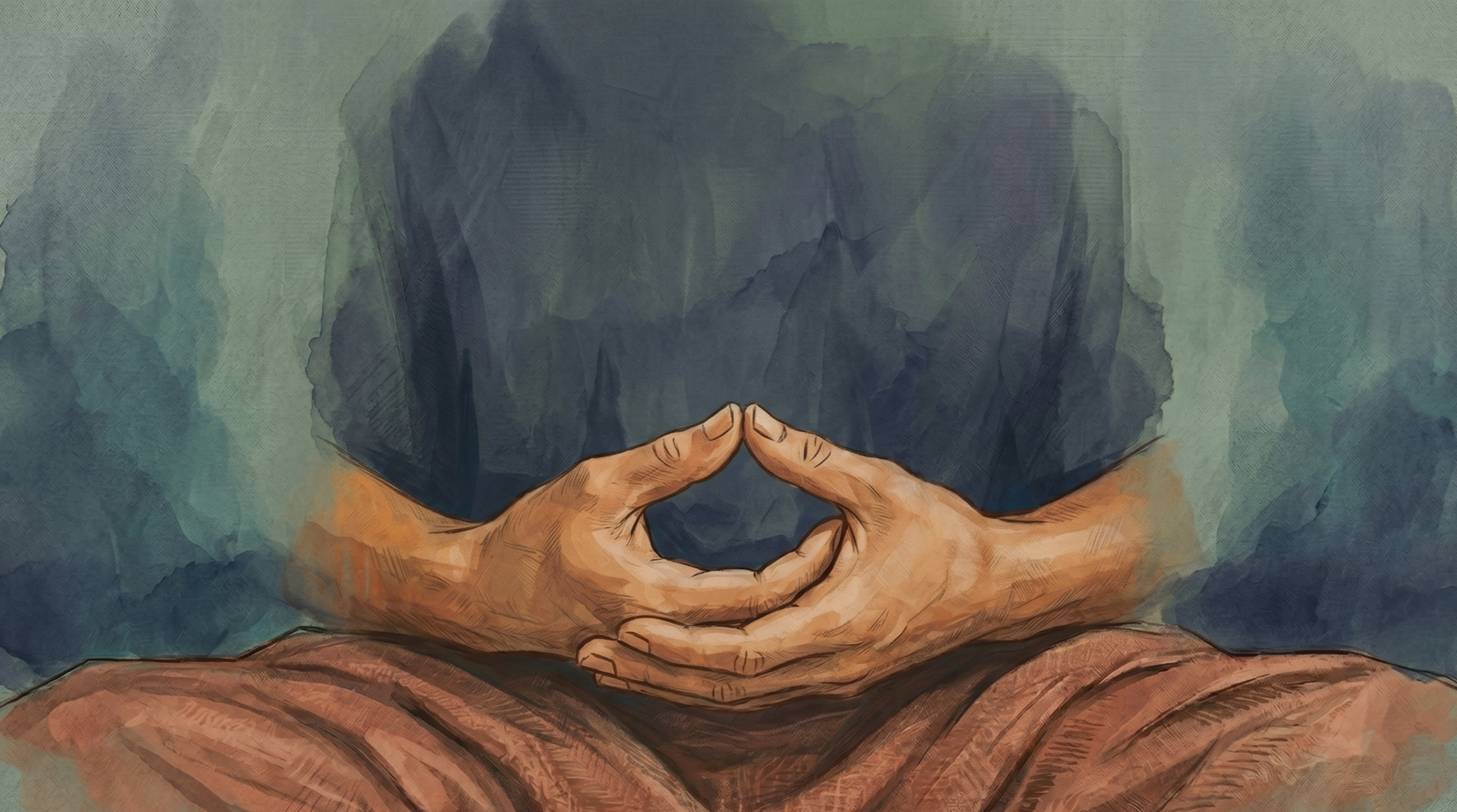
Mudras are intentional hand or body gestures used in Vedic, Hindu, and Buddhist traditions to influence mental and physical states. They're not a decorative practice. The hands occupy a disproportionately large area of the brain's sensory and motor cortex — which means intentional hand movements and positions generate real neurological signals. More on that below.
-
Journalling moves attention outward and active — externalising and organising inner experience rather than witnessing it. Meditation moves inward and still. They're complementary practices, not interchangeable ones.
-
Gratitude practice is a directed attentional and emotional training — systematically orienting your thoughts and attention toward feelings of appreciation. It shares some neurochemical overlap with meditation but operates through a different primary mechanism: social cognition and reward circuitry rather than attentional regulation. It gets its own section at the end of this post, because it deserves one.
None of these are competing with each other. They're different tools, and knowing which one to reach for changes everything about how you use it.
A Brief History: Where This All Came From 🌏
Meditation is not a wellness trend.
The earliest written references to contemplative practice appear in the Vedic texts of ancient India, somewhere around 1500 BCE — though the practices themselves almost certainly predate the writing. Buddhist teachers codified breath-based and insight meditation in the fifth century BCE. Taoist traditions developed their own version through wu wei — effortless stillness, the practice of non-doing. Christian mystics in the Eastern Orthodox tradition pursued hesychasm, an inner silence they understood as the condition for encountering the divine. Islamic dhikr — sustained, rhythmic repetition of sacred phrases — functions neurologically in ways remarkably similar to mantra meditation, arrived at through an entirely different cosmology.
Different maps. The same physiological territory.
What's remarkable isn't that one tradition discovered something the others missed. It's that humans across vastly different cultures and centuries kept arriving at the same basic insight: that learning to direct attention inward, and to be present with what's there, produces something difficult to quantify yet worth having.
The modern chapter opens in 1979, when a molecular biologist named Jon Kabat-Zinn looked at the emerging crisis in chronic illness and stress in Western medicine and asked what would happen if you took the core of these ancient practices and offered them in a hospital basement in Worcester, Massachusetts. He called it Mindfulness-Based Stress Reduction (MBSR). He deliberately stripped the religious framing — not to diminish the traditions, but to make the mechanism available to people who would never find it otherwise.
By 2015, nearly 80% of US medical schools offered some element of mindfulness training.
The practice hadn't changed. The language around it had.
The Neuroscience: What's Going On In There? 🧠
When you sit down to meditate and your mind wanders to your grocery list, a specific network of brain regions lights up. Neuroscientists call it the Default Mode Network — the DMN — and it's essentially your brain's background processing loop. It activates when you're not focused on anything in particular: replaying the past, rehearsing the future, running the social commentary, constructing the ongoing narrative of you.
It is, in other words, exactly what's happening when you think you're "bad at meditating."
A research team at Yale studied experienced meditators and novice control groups using fMRI, tracking brain activity across three different meditation styles (Brewer et al., 2011). What they found was that the two primary nodes of the DMN — the medial prefrontal cortex and the posterior cingulate cortex — were consistently less active in experienced meditators across every style of practice. Less mental noise. Less self-referential chatter. More present.
Here's the part that changes how you should think about the whole thing: the moment you notice your mind has wandered and then bring it back — that noticing itself — activates regulatory circuits in the prefrontal cortex that quiet the DMN. The researchers found this happening in novice meditators too, not just experienced ones. Which means that every single time you catch yourself thinking about dinner but then return to your breath, something measurable is happening in your brain.
You're not failing at meditating. You're doing a necessary repetition 🏋️♀️.
A follow-up study with a larger sample confirmed this extends even further — experienced meditators showed reduced DMN activity compared not just to rest, but to another active cognitive task, suggesting that regular meditation genuinely transforms the resting state of the brain itself (Garrison et al., 2015).
The structural changes compound over time. A Harvard neuroscientist named Sara Lazar compared the brains of long-term meditators with matched non-meditating controls and found that regions associated with attention, interoception, and sensory processing — including the prefrontal cortex — were physically thicker in meditators (Lazar et al., 2005). In older meditators specifically, the prefrontal cortex showed almost no age-related thinning. The brains were, in a measurable sense, ageing differently.
A follow-up study put that to the test with people who had never meditated before. Eight weeks of mindfulness practice — averaging around 27 minutes a day — produced increases in grey matter density in the hippocampus, regions associated with learning, memory, and emotional regulation, and a reduction in grey matter density in the amygdala, the brain's threat-detection centre (Hölzel et al., 2011). Less reactive. Better equipped for life’s daily challenges.
These aren't subjective reports. They're literal brain scans.
For a practice that requires nothing upfront: no cash, no waiting period, just a few minutes of your day — that's a remarkable return.
The Minimum Effective Dose 💊
In terms of a few minutes per day, the most common question once someone decides to actually try this is: how much do I need to do?
The most replicated benchmark comes from the eight-week MBSR program, where participants averaged around 27 minutes of daily practice and produced the structural brain changes described above (Hölzel et al., 2011). That's the gold standard. But it's not the floor.
Multiple randomised trials comparing shorter sessions have found that the dose-response relationship is surprisingly flat, particularly for beginners. In one study, participants in five-minute sessions reported significantly greater improvements in mindfulness and stress reduction than those in twenty-minute sessions — the longer duration was actually harder to sustain for people just starting out, which undermined any advantage the extra time might have offered. A larger meta-analysis of over two hundred randomised trials found no consistent evidence that longer sessions outperform shorter ones for psychological outcomes including depression, anxiety, and stress (Strohmaier, 2020).
A 2026 EEG study gives this some useful texture. Researchers tracked brainwave activity in three groups — complete beginners, novice meditators, and advanced practitioners — during a ten-minute breath-watching session. Significant changes in alpha, theta, and beta brainwave patterns emerged in all three groups within two to three minutes of starting, and peaked between seven and ten minutes. Advanced meditators showed consistently higher theta power throughout — the pattern of deeper practice compounding over time — but even the complete beginners were showing measurable neural shifts well before the session was halfway through (Saketh et al., 2026).
Seven minutes. Not thirty. Not the mythical hour-long sit.
What does measurably predict outcomes is one thing: daily consistency.
A short session every day outperforms a long session twice a week. Think of it like going to the gym for your mind — repeated practice builds the gains.
If we're talking about the deeper structural gains, there's a caveat to be clear about. The research on longer-term structural change suggests the floor is meaningfully higher than five minutes — some studies point toward 30+ minutes of daily practice being where lasting neurological adaptation begins to compound. The floor for feeling noticeable improvements is lower than the floor for lasting structural change.
For most people starting out, five to ten minutes daily is enough to start building the neural habit. The goal on day one isn't rewiring your brain. It's showing up and getting started in any way you can, then making that your daily goal.
For People Who "Can't Meditate" 🤯
If you've ever sat down to meditate and spent the entire time thinking, congratulations — you've just described everyone who has ever meditated, including the people who've been doing it for decades.
The idea that meditation requires a quiet mind is the single most persistent and damaging myth about the practice. It's also, conveniently, the one that lets people off the hook for never starting.
Here's what's actually happening when your mind wanders during meditation: the Default Mode Network (DMN) is activated. That small, often frustrated moment of oh, I was thinking again — that exact moment — is when regulatory circuits in your prefrontal cortex fire to quiet down the DMN (Brewer et al., 2011). That process of noticing and returning is not an interruption to the practice. It is the practice. The neural research on this is unambiguous: that catch-and-return moment produces a measurable response in the brain. Every single time. Which means every distracted, imperfect, grocery-list-interrupted session is part of the brain strengthening journey.
The reps still count even when they feel like failures.
Think of it like when you want to have a nap but you don’t actually fall asleep — laying down and resting your eyes, even for a few minutes still helps.
If sitting still with your eyes closed genuinely doesn't work for you, there are other doors into the same room. Walking meditation — deliberate, slow, attention placed on the physical sensation of each step — quiets the DMN just as effectively. Body scan practice, where your attention moves systematically through physical sensation rather than anchoring to the breath — suits people whose minds need something concrete to follow. Breathwork — even three minutes of conscious breathing before a cognitively heavy task — shifts the nervous system into a more receptive state.
For the particularly restless, there are mudras — intentional hand gestures that give a restless mind something physical to hold while the nervous system settles. We'll get to those shortly.
The question was never whether you can meditate. It was whether you'd clicked with a version of it that actually fits you.
Stillness Is Not The Same As Meditation 🪷
Stillness is the condition, physical or mental. Meditation is a practice you can do within it.
You can be still without meditating — sitting by water, lying in the dark. You can meditate without conventional stillness — walking, breathing intentionally on a crowded train, holding a mudra at your desk. They're related but they're not the same thing. It doesn’t help that modern life has quietly engineered both of them out of most of our days.
Researchers at the University of Virginia put this to an unusual test. In a series of studies, participants were asked to sit alone in a room with nothing to do but think — no phone, no book, nothing to engage with — for somewhere between six and fifteen minutes (Wilson et al., 2014).
Most didn't enjoy it.
Nearly 90% reported their minds had wandered significantly. Almost half rated the experience as unpleasant. In one striking study, a significant proportion of participants chose to administer mild electric shocks to themselves rather than continue sitting alonewith their thoughts — including people who had previously said they would pay money to avoid being shocked.
The untrained nervous system will do almost anything to escape unstructured inner space.
This is worth exploring because it reframes what meditation actually is. It's not the natural resting state of a calm person. It's a trained capacity. Stillness without that training tends to collapse into rumination. Meditation gives the encounter with inner silence a structure, an object, a point of return.
It’s a way to make moments of silence, boredom, or stillness an actual asset to your mind and body — rather than a moment to be feared or quickly resolved by pulling a screen of endless mental distraction out of your pocket.
Ancient Technology for Modern Hands 👌
The word mudra comes from Sanskrit — loosely translated as seal or gesture. Intentional hand and body positions have been used across Hindu ritual, Buddhist meditation, Jain practice, and classical Indian dance for thousands of years. They appear in the hand positions of deities depicted in ancient stone. They survived the journey into every major contemplative tradition that touched the Indian subcontinent.
They are not decorative.
Here's the neurological case. Your hands occupy a disproportionately large area of the brain's sensory and motor cortex — far larger than their physical size would suggest. This is the hand homunculus: the map of the body in the brain, where the hands take up more real estate than the torso. What this means in practice is that intentional hand positions generate strong, continuous sensory signals to the brain.
The energetic claims — prana circuits, meridian channels, the five elements mapped to five fingers — sit in a different evidence category. These are Wisdom Tradition territory: ancient frameworks that have guided practice for millennia without needing a peer-reviewed journal to validate their usefulness. You don't have to choose between the two explanations. Both can be true simultaneously, describing the same phenomenon in different languages.
Four you can try, all accessible without any prior experience:
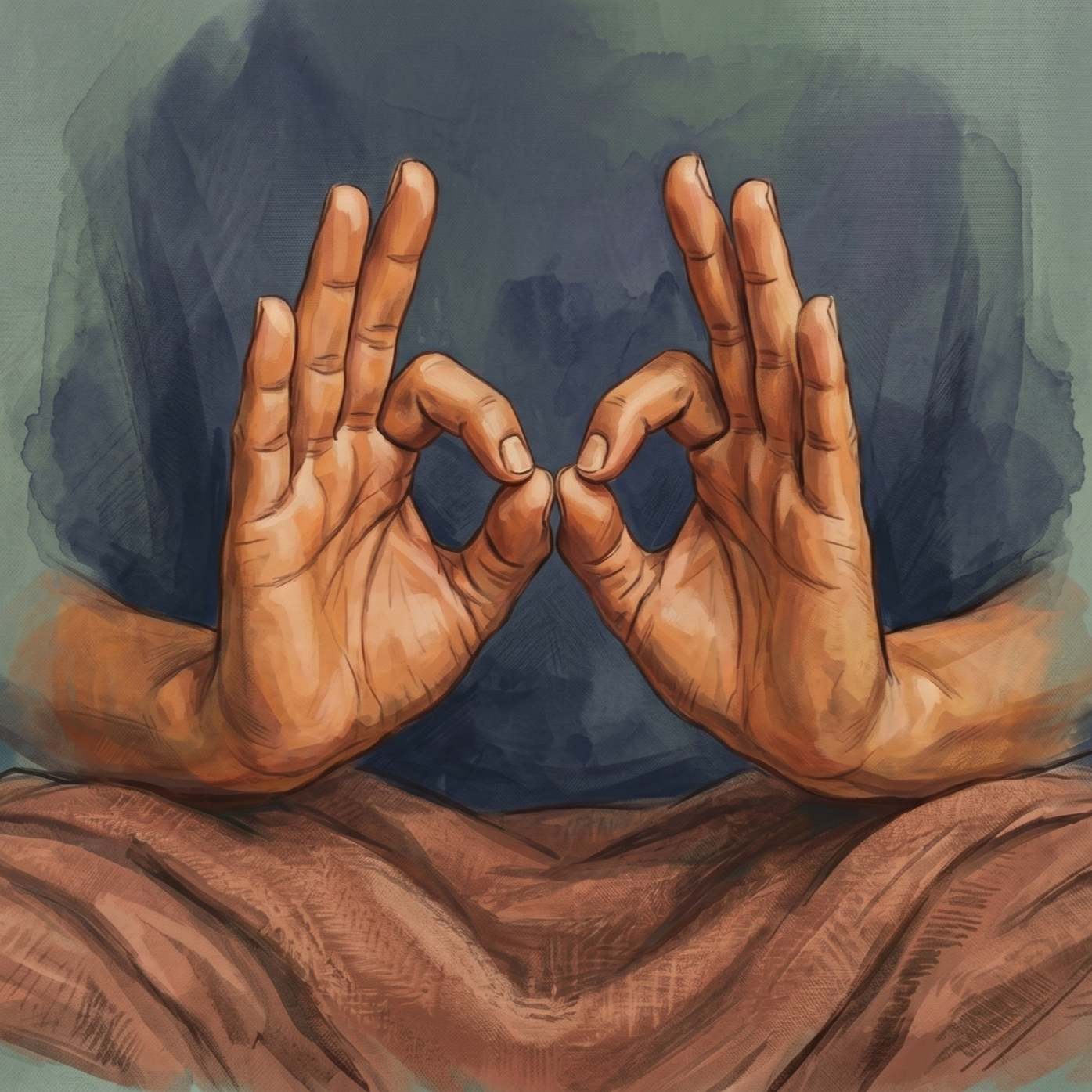
Gyan Mudra
Index fingertip to thumb tip, other fingers extended. The most recognisable. Associated with concentration, memory, and a quality of calm alertness — focus.
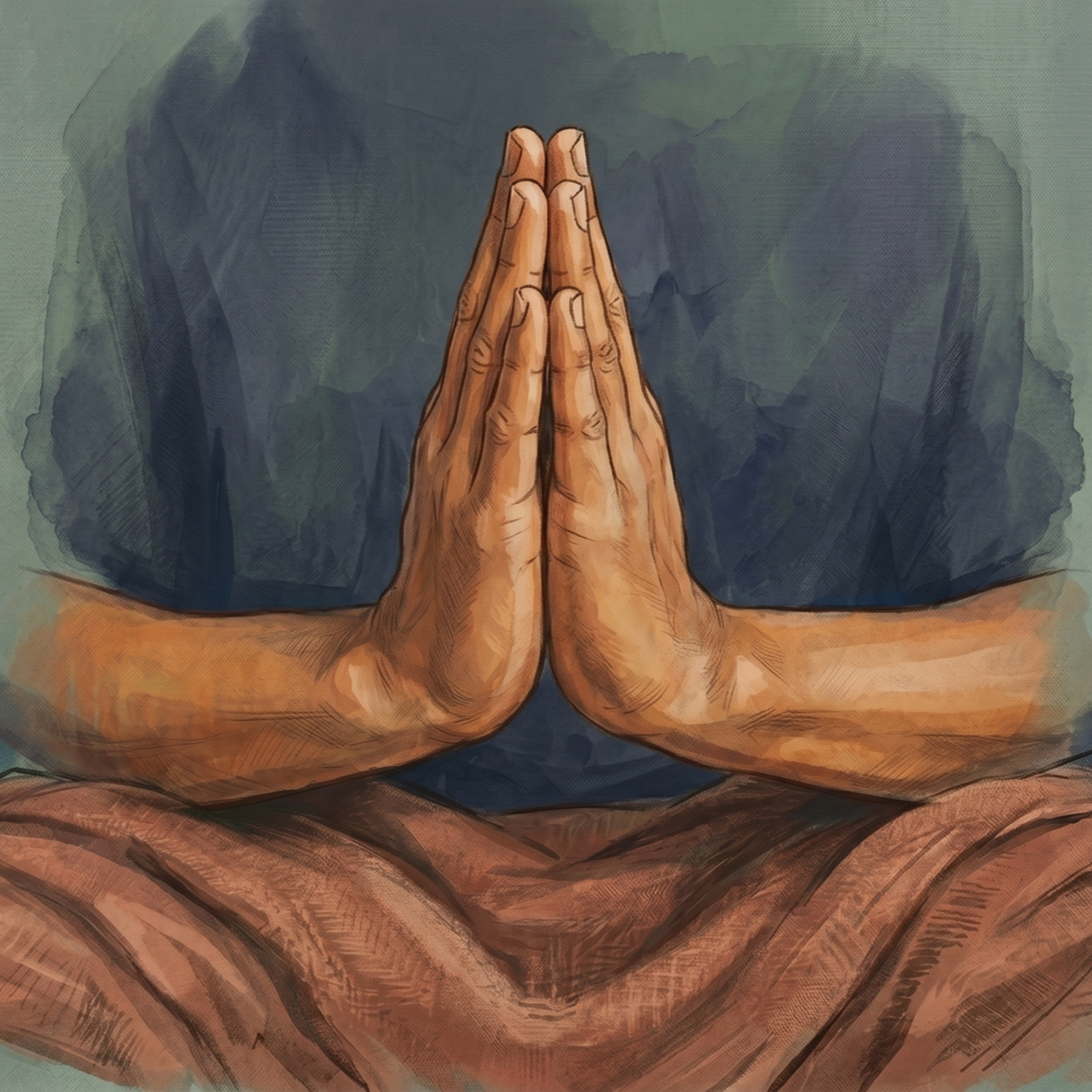
Anjali Mudra
Palms together at the heart. Cross-cultural to a degree that's almost eerie: it appears in Christian prayer, Hindu ritual, yoga, and the greeting of dozens of cultures. Try combining it with gratefulness meditation.
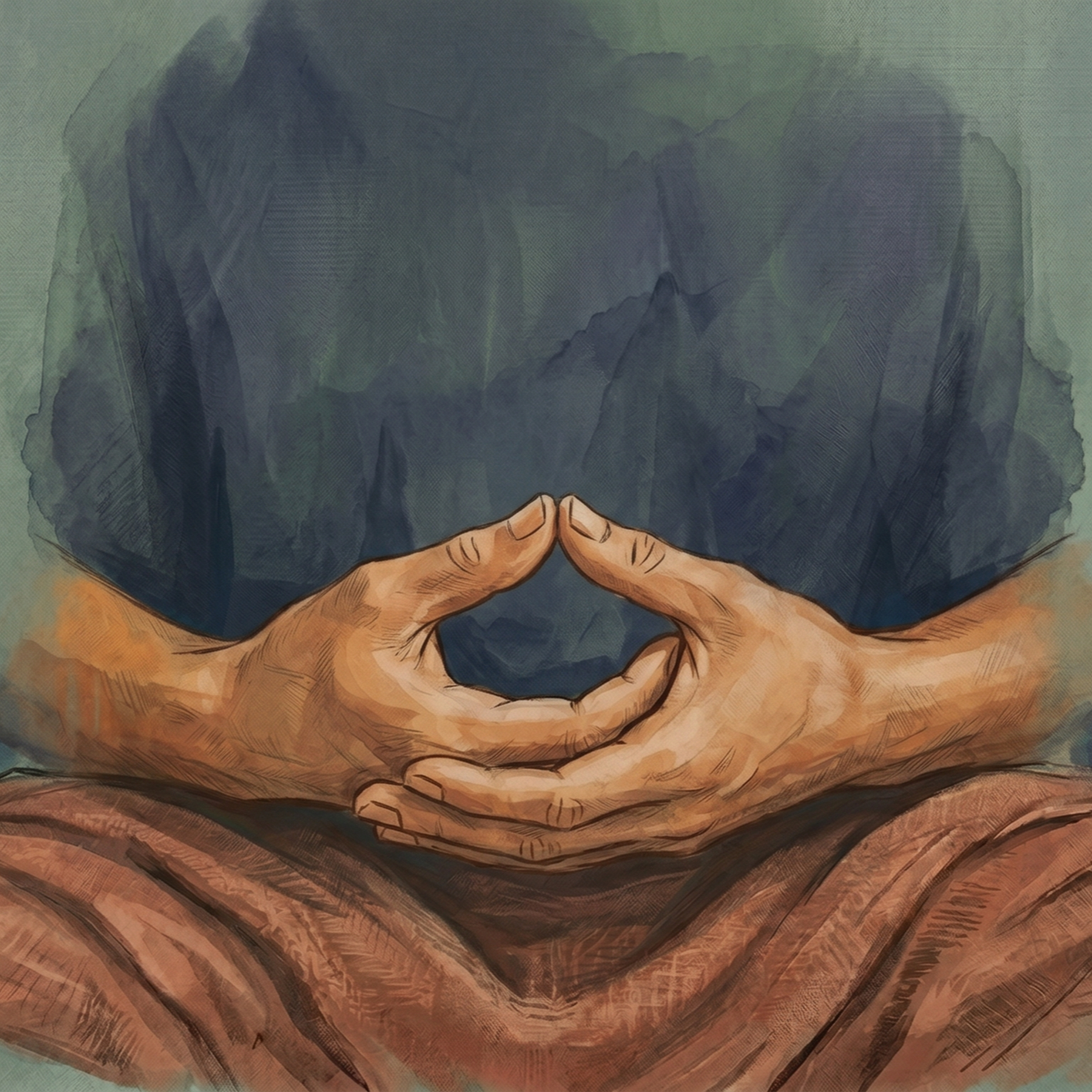
Dhyana Mudra
Hands cupped in the lap, thumbs lightly touching. Closes a circuit and gives the hands — and through them, the brain — a gentle, continuous anchor. Try using for general calmness and a sense of a higher purpose.
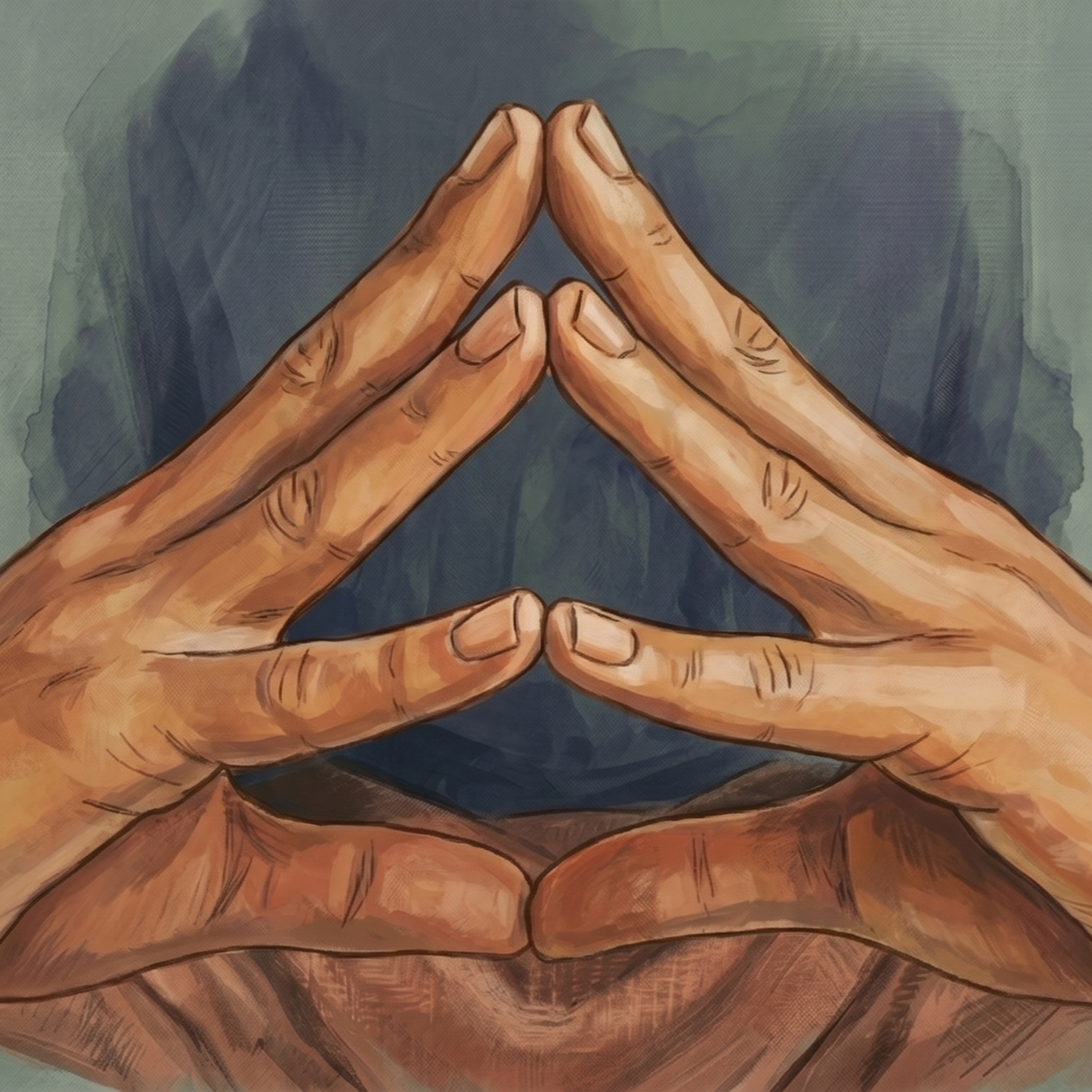
Hakini Mudra
All finger tips on each hand touching, with fingers spread and palms apart. Traditionally used to open your mind or third eye chakra. Try using it when studying or working through something difficult.
For anyone who finds seated breath meditation frustrating — who needs something to do with their hands while the rest of them settles — mudras offer exactly that. A somatic anchor. Something precise and intentional that the restless body can hold while the mind begins to quiet.
It's also worth noting that this wasn't only an Indian discovery. Traditional Chinese Medicine developed its own system of intentional hand practices — finger exercises rooted in meridian and acupoint theory, combining coordinated movement, pressure, and mindfulness — arrived at through an entirely different cosmological framework, across a different continent, over a different timeline. A 2025 review of the emerging research found preliminary evidence that these practices improve cognitive performance, reduce anxiety and depression, and enhance neuroplasticity through mechanisms including neurotransmitter modulation and reduced inflammation (Liu et al., 2025).
Gratitude Practice: A Different Kind of Training
Gratitude practice has been folded into the wellness conversation so many times it can start to sound meaningless. This couldn’t be further from the truth. The neuroscience behind it is genuinely interesting — distinct enough from meditation that it's worth digging into separately.
When researchers at USC put people in an fMRI scanner and guided them through experiencing different intensities of gratitude, they found something that differentiates it from general meditating: gratitude doesn't light up the brain's basic reward and pleasure centres the way a good meal or a dopamine hit does. The regions that activated were ones associated with moral reasoning, understanding other people's intentions, and social connection (Fox et al., 2015). Which makes a kind of sense — genuine gratitude isn't just a good feeling, it's a recognition. Something good arrived because another person chose to make it happen. The brain registers that differently to simple pleasure, and that distinction matters for how we intentionally practise it.
A separate study at Indiana University split people entering therapy for anxiety and depression into two groups: one wrote gratitude letters over three weeks, the other received therapy as usual. Three months later, both groups underwent fMRI. The gratitude writers' brains had become measurably more attuned to gratitude — when those people encountered grateful moments, the relevant brain regions fired more strongly than in the control group (Kini et al., 2016). Their brains had essentially been recalibrated to notice and register appreciation more readily. That shift was still present three months after the writing practice had ended.
A few hours of letter writing. Effects still showing up in brain scans a quarter of a year later.
One caveat: this study was conducted with people seeking clinical support for anxiety and depression, so how directly the findings apply to a general population was not explored in that study. The broader picture — across multiple studies of gratitude interventions — consistently shows reduced inflammatory markers, improved heart rate variability, and better sleep outcomes (Redwine et al., 2016).
What's clear enough is this: gratitude practice and meditation are not the same thing. Meditation primarily trains attentional regulation — the capacity to direct and sustain focus. Gratitude practice primarily trains evaluative orientation — systematically shifting what the attention notices and values. Both change the brain over time. Through different doors.
💜 Soul Mapping + Practical Grounding
If you've read this far and still feel like you don't know where to start, here's the simplest possible version.
Pick one of the following options.
Do it tomorrow morning before you pick up your phone.
Do it for seven minutes. Then do it again the next day too.
Breath anchor: Sit somewhere you won't be disturbed. Close your eyes. Follow the physical sensation of your breath, the rise and fall of your chest, the way the air moves in and out — not controlling it, just noticing it. When your mind wanders (it will), simply notice that it has (that’s ok and expected), then return back to following your breaths. That's it. That's the whole practice, for seven minutes — you can set a timer on your phone or watch if needed.
Walking meditation: Walk slowly, without a destination (avoids feeling like a task or goal), place your attention on the physical sensation of each foot meeting the ground. When your mind wanders, return to the feet.
Gratitude writing: Before you start the day, write three things you're genuinely grateful for. You can combine this with a morning journaling practice such as writing 3 pages as recommended in The Artist’s Way by Julia Cameron. Find gratitude for specific things — moments, people, small details from yesterday. The mental searching process is part of getting the benefit itself.
Any one of these or a rotation of them, done consistently, is enough to begin.
💜 The practices in this post sit inside a larger container of my Soul Mapping course — specifically the Practice Layers, where we look at which tools genuinely fit your nervous system, your temperament, and where you are right now. Meditation, stillness, mudras, and gratitude practice aren't assigned. They're explored for the right fit. Because the best practice isn't the one with the most evidence behind it. It's the one you'll actually return to consistently.
If you're curious what that looks like you can find out more here.
References
Brewer, J.A., Worhunsky, P.D., Gray, J.R., Tang, Y-Y., Weber, J. & Kober, H. (2011). Meditation experience is associated with differences in default mode network activity and connectivity. PNAS, 108(50), 20254–20259. DOI: 10.1073/pnas.1112029108
Fox, G.R., Kaplan, J., Damasio, H. & Damasio, A. (2015). Neural correlates of gratitude. Frontiers in Psychology, 6, 1491. DOI: 10.3389/fpsyg.2015.01491
Garrison, K.A., Zeffiro, T.A., Scheinost, D., Constable, R.T. & Brewer, J.A. (2015). Meditation leads to reduced default mode network activity beyond an active task. Cognitive, Affective & Behavioral Neuroscience, 15(3), 712–720. DOI: 10.3758/s13415-015-0358-3
Hölzel, B.K., Carmody, J., Vangel, M., Congleton, C., Yerramsetti, S.M., Gard, T. & Lazar, S.W. (2011). Mindfulness practice leads to increases in regional brain grey matter density. Psychiatry Research: Neuroimaging, 191(1), 36–43. DOI: 10.1016/j.pscychresns.2010.08.006
Killingsworth, M.A. & Gilbert, D.T. (2010). A wandering mind is an unhappy mind. Science, 330(6006), 932. DOI: 10.1126/science.1192439
Kini, P., Wong, J., McInnis, S., Gabana, N. & Brown, J.W. (2016). The effects of gratitude expression on neural activity. NeuroImage, 128, 1–10. DOI: 10.1016/j.neuroimage.2015.12.040
Lazar, S.W., Kerr, C.E., Wasserman, R.H., Gray, J.R., Greve, D.N., Treadway, M.T., McGarvey, M., Quinn, B.T., Dusek, J.A., Benson, H. & Rauch, S.L. (2005). Meditation experience is associated with increased cortical thickness. NeuroReport, 16(17), 1893–1897.
Liu, J., Shi, H. & Yang, Y. (2025). Mindfulness-based finger exercise for health and well-being: theory, evidence, and implications. Global Advances in Integrative Medicine and Health, 14, 27536130251386846. DOI: 10.1177/27536130251386846
Redwine, L.S., Henry, B.L., Pung, M.A., Wilson, K., Chinh, K., Knight, B., Jain, S., Rutledge, T., Greenberg, B., Maisel, A. & Mills, P.J. (2016). Pilot randomised study of a gratitude journaling intervention on heart rate variability and inflammatory biomarkers in Stage B heart failure patients. Psychosomatic Medicine, 78(6), 667–676. DOI: 10.1097/PSY.0000000000000316
Saketh, M., Sasidharan, A., Venugopal, R., Tewarie, P.K., Nagendra, R.P., Northoff, G., Laureys, S., Subramaniam, B. & Kutty, B.M. (2026). Temporal EEG signatures of meditation experience: peak brainwave changes at 7 minutes during Isha Yoga breath watching. Mindfulness, 1–17.
Strohmaier, S. (2020). The relationship between doses of mindfulness-based programs and depression, anxiety, stress, and mindfulness: a dose-response meta-regression of randomised controlled trials. Mindfulness, 11, 1315–1335.
Wilson, T.D., Reinhard, D.A., Westgate, E.C., Gilbert, D.T., Ellerbeck, N., Hahn, C., Brown, C.L. & Shaked, A. (2014). Just think: the challenges of the disengaged mind. Science, 345(6192), 75–77. DOI: 10.1126/science.1250830
Further Reading
Cousin, L.A. (2019). Exploration of Gratitude in Cardiovascular Health: Mediators, Medication Adherence and Psychometrics. University of South Florida. [Doctoral dissertation] — Review of gratitude/cardiovascular evidence base; corroborates Redwine et al. findings across multiple studies.
Kabat-Zinn, J. (1979/2013). Full Catastrophe Living: Using Mindfulness to Reduce Stress, Cultivate Well-Being, and Live with Joy. Bantam Books. — Foundational MBSR text; informed the history section and definitional framing throughout.
Kabat-Zinn, J. (2011). Some reflections on the origins of MBSR, skillful means, and the trouble with maps. Contemporary Buddhism, 12(1). — Informed the secularisation framing in Section 3.
Lazar Lab for Meditation Research, Massachusetts General Hospital. massgeneral.org/psychiatry/research/lazar-lab-for-meditation-research — Ongoing research programme; informed broader structural brain change framing.
