Magic Is Real (You're Already Using It) 🧙♀️
The Object in Your Pocket 📱
You have crystals in your hand right now — or perhaps your pocket.
You probably call it a phone.
The screen is a liquid crystal display — organic molecules that flow like liquid but bend light like a solid, switched by electrical current millions of times per second to produce the image you're looking at. The timing mechanism inside, the thing that keeps every clock on earth synchronised, is a quartz oscillator — a crystal vibrating at exactly 32,768 times per second because that's what quartz does when you run a current through it. The case is likely aluminium and glass. The processor is silicon, refined from the same stuff as beach sand, etched with circuits so small they're measured in atoms.
You carry this everywhere. You sleep next to it. You feel vaguely wrong when it's not in the room.
Yet somewhere, someone is burning sage and getting side-eye for believing in crystals.
The magical properties of sage aside, stay posted for my cooking channel spinoff — Cooking with Fires of Alchemy... ok, that was only half a joke. In this post we deep dive into the ever-blurring line between magic and science, and why the distinction may matter less than you think.
The Crystal Problem 💎
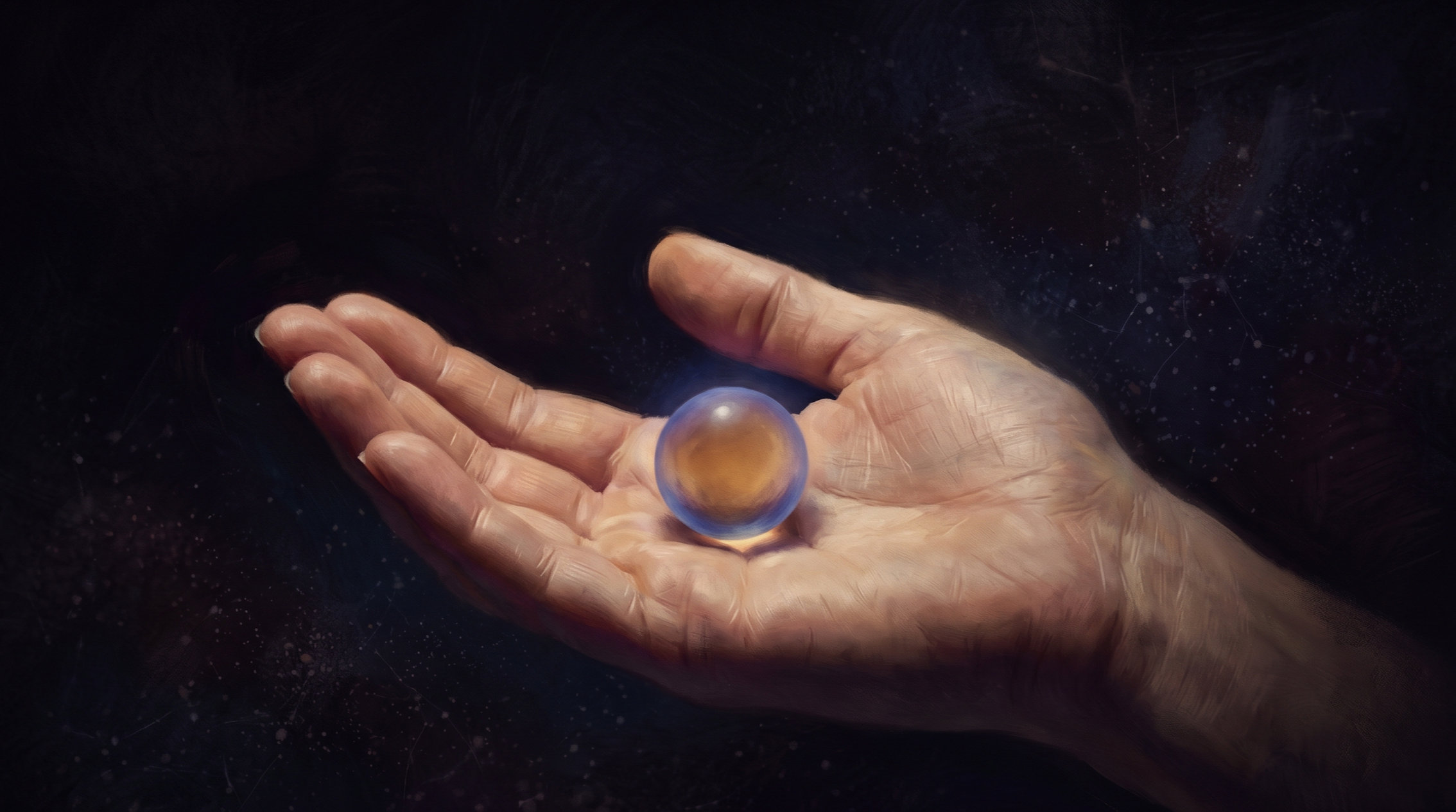
Let's start with the lighter in your kitchen drawer.
When you press the ignition button on a piezoelectric lighter, you're compressing a small quartz crystal. That compression generates a high-voltage electrical charge — enough to produce a spark. No battery. No fuel line. Just pressure on a crystal, and fire appears. This is the piezoelectric effect, first described by Pierre and Jacques Curie in 1880, and it's the same principle running the oscillator in your phone, the pressure sensors in your car's airbag system, and the ultrasound transducer your doctor uses to look inside a body without cutting it open.
The marble benchtop in a butcher's shop draws heat out of the meat and keeps the working surface cool — the same thermal property that made stone floors desirable in hot climates for thousands of years, long before anyone called it thermodynamics. The silicon chip in your laptop is refined from silicon dioxide — the same compound as quartz, as sand, as most of the earth's crust. Your LCD screen is liquid crystals responding to electrical signals. Increasingly, the power running all of it comes from photovoltaic solar panels: silicon crystals capturing photons from the sun and converting them directly into electrical current.
Speaking of the sun — getting it on your skin isn't just pleasant. Your body synthesises vitamin D through a photochemical reaction triggered by UVB radiation, and without adequate exposure, the consequences are measurable: seasonal affective disorder is a clinically recognised condition, treated in northern countries with artificial full-spectrum light therapy because the real thing isn't available. This is why the advice to 'go outside for some sun' isn't generic hollow advice — you should make sure you actually do it for at least a few minutes.
It's become such a routine part of our day we've started to forget the magic in all of it.
Frequencies Are Not Woo 📡
The word "frequency" gets thrown around in wellness circles enough that it's started to sound suspicious. It shouldn't.
Every time you make a phone call, the sound frequency of your voice is converted into data and transmitted as radio waves — electromagnetic oscillations moving through the air at the speed of light. At the other end, that data is converted back into sound waves through a speaker, which reach the Fibonacci spiral-shaped cochlea inside your ears, where they're converted again into electrical signals that travel through nerves to your brain, and you hear it. That's at least four conversions between different forms of energy in a single phone call — and that's before accounting for the signal potentially travelling as pulses of light through fibre optic cables running along the ocean floor between continents.
X-rays, MRI, radio, television — the electromagnetic spectrum is mostly invisible, mostly intangible, and almost entirely responsible for modern medicine and telecommunications. We've built our civilisation on forces we can't see or touch. That was always the arrangement.
It goes deeper than engineering. In 2007, researchers at UC Berkeley published a study in Nature confirming that photosynthesis operates using quantum coherence (Engel et al., 2007). Rather than energy hopping molecule to molecule in a classical way, it moves as a quantum wave, simultaneously exploring multiple pathways and collapsing to the most efficient one. This is why photosynthesis achieves near-perfect energy transfer efficiency — something our best solar panels still can't match.
The tree outside your window is running quantum computing. It has been for half a billion years.
Closer to home: researchers have now begun decoding individual words directly from electromagnetic brain signals recorded by electrodes placed on the scalp — no surgery, no implant (d'Ascoli et al., 2025). Just the field your brain generates, read from the outside. Companies are already building this into wearable headsets.
Your thoughts are a measurable field. We're only beginning to read them.
We have always used technology to harness physics in magical ways
Imagine you've never seen a lighter before. Someone presses a button, and fire appears from a small plastic rectangle. No flint, no kindling, no visible mechanism. What would you call that?
Now imagine you're standing next to someone in 250 BCE who fills a clay vessel with vinegar and uses the resulting electrical charge for — well, we're still not entirely sure what. Electroplating, some researchers suggest. Ritual use, say others. The Baghdad Battery, as it's now known, produces a measurable charge when assembled correctly. The physics works. Whether its makers understood it in our terms doesn't change what it was doing.
The Antikythera Mechanism — a device of at least thirty interlocking bronze gears pulled from a Greek shipwreck, capable of predicting astronomical positions and eclipses decades in advance — would have been, to most people who encountered it, inexplicable. As would Roman aqueducts delivering water across hundreds of kilometres through gradient alone, or the Nabataean rainwater harvesting systems built in the middle of a desert, or the urban drainage infrastructure of the Indus Valley civilisation, two thousand years before Rome.
These weren't primitive people stumbling toward understanding. They were working with forces they understood through a different language — one that looked, from the outside, like mystery. Like magic.
Which raises the obvious question. What does our technology look like from the outside? What will it look like in a thousand years? The word "magic" might just be what we call physics we haven't caught up with yet — in either direction.
Astrology falls under the same argument through a different lens — ancient sky-watchers doing applied astronomy for navigation, agriculture, and medicine, long before we had the vocabulary to call it that. While it’s taken on new interpretations in the modern day, it was born from observation of natural patterns and early science.
Your Body Is a Field ⚛️
Your brain is generating electromagnetic fields right now.
This isn't metaphor. Electroencephalography — EEG — has been measuring them since the 1920s. The oscillations come in distinct frequency bands, each associated with different states: delta waves during deep sleep, theta at the edge of dreaming and deep meditation, alpha in calm relaxed focus, beta in active thinking, and gamma — the fastest — associated with heightened perception and integrated awareness. Long-term meditating Buddhist monks, studied at the University of Wisconsin, self-generated sustained high-amplitude gamma synchrony during loving-kindness practice — the highest gamma activity ever recorded in a non-pathological context (Lutz et al., 2004). These weren't passive measurements. The monks were doing something deliberate with their brains, and the physics of it was visible from the outside.
We use this deliberately. Meditation, breathwork, binaural beats, hypnosis — these are all, among other things, tools for shifting which frequency band dominates. Different states for different purposes. The technology of intentional consciousness has been refined across cultures for thousands of years. Neuroscience is catching up with the instruction manual.
The heart is doing something similar, at a larger scale. Research from the HeartMath Institute has measured the heart's electromagnetic field extending several feet outside the body in all directions — detectable using sensitive magnetometers, and significantly stronger than the field produced by the brain (McCraty et al., 2009). The field changes measurably with emotional state: coherent, positive emotional states produce a fundamentally different electromagnetic signature than states of stress or anger. Your emotional state isn't just something you feel. It's something you broadcast.
You've probably experienced this without having language for it. Walking into a room and sensing the tension before anyone has said a word. Someone entering and the atmosphere shifting. A 2022 review confirmed that measurable physiological synchrony between people — in heart rate, respiration, skin conductance, and neural oscillatory activity — is well documented across multiple contexts (Marzoratti & Evans, 2022). A 2020 sleep study found that couples sharing a bed synchronise their sleep architecture significantly more than when sleeping apart, and that the depth of their relationship predicted the degree of synchronisation (Drews et al., 2020).
The mechanism isn't fully understood. It probably involves electromagnetic fields, micro-expressions, olfactory signals, circadian entrainment — likely all of these at once. But the phenomenon is real and consistent: we are not sealed units. We affect each other's physiology at a distance, through presence alone.
Mystics have been saying this for millennia. The measurement equipment just arrived recently.
Stardust 🌠
Here is something that is simply, verifiably true.
Every element heavier than hydrogen was forged inside a star. The carbon in your cells, the calcium in your bones, the iron in your blood — all of it was produced through nuclear fusion in stellar cores and scattered across space when those stars died. As Carl Sagan put it: "The nitrogen in our DNA, the calcium in our teeth, the iron in our blood, the carbon in our apple pies were made in the interiors of collapsing stars."
Over ninety percent of your body mass was, at some point, inside a star that exploded.
Zoom in further. The iron in your blood is held inside a protein called haemoglobin — specifically inside the haem group, a ring-shaped molecular structure that evolution has refined over billions of years to grip iron in exactly the right geometry to pick up oxygen in your lungs and release it precisely where it's needed. Iron forged in a dying star, scattered across space, gathered into a planet, incorporated into life, and shaped by billions of years of biological trial and error into a structure whose whole purpose is to carry that iron through your body.
That chain of events produced you.
If that doesn't qualify as magical, the definition needs revisiting.
The Edge of the Map 🗺️
Some of what follows is settled science. Some of it is serious scientific speculation. Some of it is philosophy. I'll try to be clear about which is which.
Quantum entanglement is confirmed physics. Two particles become correlated such that measuring one instantaneously determines the state of the other, regardless of the distance between them. This is not science fiction — it's been experimentally verified, and we're already building technology on it. Quantum computers are operational. Quantum-encrypted communication networks exist. The strangeness of the quantum world isn't a fringe idea; it's the foundation of the next generation of infrastructure.
The holographic principle — the proposal that the information content of a volume of space can be fully described by data on its boundary surface, the way a three-dimensional image is encoded on a flat holographic film — has serious scientific advocates, including Stephen Hawking and Leonard Susskind. It's not consensus cosmology, but it's taken seriously by the people doing the hardest physics. If it's correct, the three-dimensional world we move through is, in some meaningful sense, a projection.
Fractal geometry is confirmed mathematics. Benoît Mandelbrot formalised it; nature had been running it for billions of years before that. The same self-similar pattern — repeating at every scale — appears in coastlines, fern leaves, river systems, lung bronchi, blood vessel branching, snowflakes, and galaxy clusters.
The Fibonacci sequence and the Golden Ratio that emerges from it — each number the sum of the previous two, generating a ratio of approximately 1.618 — show up in sunflower seed spirals, pine cone scales, the nautilus shell, the arrangement of leaves on a stem optimised for maximum light capture, and the spiral of the cochlea we met earlier in this post. The pattern appears because it solves a packing problem with elegant efficiency. Nature isn't being mystical. It's just very good at maths.
John Conway's Game of Life — four simple rules applied to a grid of cells — generates self-organising, reproducing, endlessly complex behaviour from nothing but those rules and a starting configuration. Stephen Wolfram spent a career arguing this is how reality itself may work: that the complexity we see everywhere, in weather systems and ecosystems and consciousness, emerges from simple computational rules applied recursively. It's a philosophical position, not a proven fact. But it rhymes with something.
The same spiral that appears in a nautilus shell, a sunflower head, a galaxy arm, and the cochlea of the human ear shows up in the Temple of Osiris at Abydos, in Islamic geometric tiling, in Gothic cathedral architecture, in Hindu temple design. The Fibonacci sequence and the Golden Ratio were never invented — they were noticed. Humans across vastly different cultures, with no contact with each other, kept building the same proportions into their most significant structures because they were looking at the same source material: the natural world. The mathematics was already there. We just kept finding it.
Whether there's more to it than that is a question worth sitting with. But even the straightforward explanation is remarkable — that nature runs on deep mathematical structure, that we are embedded in that structure, and that the impulse to build something sacred sent cultures across time and space reaching for the same numbers.
The Woo Woo Meter 👽
Everything in this post sits somewhere on a spectrum.
At one end: peer-reviewed, replicated, publishable in Nature. Piezoelectricity. Quantum coherence in photosynthesis. Stellar nucleosynthesis. Brainwave frequencies. The sleep synchrony data. These aren't contested. At the other end: things that may be true, may be meaningful, and may be permanently outside the reach of the instruments we currently have — or will ever build.
In between are two more zones. Evidence-informed: credible research, real instrumentation, findings that haven't yet achieved full independent replication but are above the noise floor. The heart field work sits here. Binaural beats sit here. And wisdom tradition: frameworks that have guided human practice for millennia without needing a peer-reviewed journal to validate their usefulness — and which neuroscience keeps quietly confirming, piece by piece, decades later.
Peer Reviewed
🔬
Evidence Informed
🧬
Wisdom Tradition
🔥
Intuition
🪷
Peer Reviewed 🔬 Evidence Informed 🧬 Wisdom Tradition 🔥 Intuition 🪷
I think about this as a Woo Woo Meter. Not used as an excuse for dismissal or for deciding what's allowed to be real — but as a tool for honest navigation through an expanding sea of information. Knowing which position on the meter a claim lives in lets you engage with it properly. The sceptic who collapses everything into "proven or fake" and the true believer who treats everything as equally valid are making the same mistake from opposite directions. Both are skipping important questions and areas of further exploration.
The spectrum is the point. Staying curious across all of it — while keeping a discerning eye on where specific claims actually land — is the more interesting, and more honest, way to move through a world this strange. Generally the most important deciding factors are the source, where did this information come from — who paid for this to exist?
If you want to go deeper on how to do that without losing your mind or your sense of wonder, the media literacy and discernment post in Chapter 6 is a starter map.
Why Not Sprinkle a Little More 🪄
Here's the practical question underneath all of this: if the world is already this strange, this layered, this quietly extraordinary — what do you lose by leaning into it a little?
Research from UC Berkeley found that awe — specifically awe, not just general positive affect — was the strongest predictor of lower levels of proinflammatory cytokines across two studies (Stellar et al., 2015). Not joy, not contentment, not gratitude. The emotion most associated with encountering something vast and not fully comprehensible. Seeing the world as bigger than you are, it turns out, is measurably good for your immune system.
This is why ritual objects aren't silly. A crystal on your desk, a wand, a talisman — these work partly as conditioned anchors. Repeated use of a specific object in intentional states builds an association between the object and that state. The object isn't magic. You trained yourself into a response using the object. That is, depending on which register you're working in, either applied psychology or a spell. Both descriptions are accurate.
Underneath all of this is something older. Animism — the worldview held across Aboriginal Australian, Māori, Ojibwe, Shinto, and countless other traditions — holds, as anthropologist Graham Harvey puts it, that "the world is full of persons, only some of whom are human, and that life is always lived in relationship with others" (Harvey, 2005). Not as a poetic way of speaking about nature, but as a literal description of how reality is structured — one in which relationship and personhood extend far beyond the human.
It's worth sitting with the fact that this is one of the oldest and most geographically widespread worldviews in human history. The erosion of animism as a worldview uncomfortably maps on to the same acceleration of extractive behaviour toward ecosystems — overfishing, deforestation, soil degradation, the slow erasure of species we never bothered to learn the names of. When the world is full of persons, it's harder to treat it as raw material.
It's worth asking who benefits from encouraging people to see the world as raw material to be extracted from. That framing had to be taught. It runs against what we know — in our bodies, and now in our data — about human nature across cultures and millennia. Animism wasn't replaced because it was wrong. It was inconvenient. And what replaced it is killing us, slowly, along with everything else.
Science has confirmed more strangeness in the last hundred years than in all the centuries before it. The closer we look, the weirder it gets. Why not leave the door open a little wider.
💜 Soul Mapping
This is exactly the territory Soul Mapping moves through in the Spirit Branch — not to convince you of anything, but to give you a structured space to ask what you actually believe, where those beliefs came from, and whether they're still serving you.
The tools we use in that process — tarot, the Grimoire, ritual objects, crystals — aren't external sources of magic. They're anchors. They give abstract inner shifts a physical place to land. You already live in a world full of invisible forces doing extraordinary things. These just help you remember that you're one of those forces of nature.
If you're curious what that process looks like, Soul Mapping is where it lives.
References 📚
d'Ascoli, S., Bel, C., Rapin, J., Banville, H., Benchetrit, Y., Pallier, C. & King, J.R. (2025). Towards decoding individual words from non-invasive brain recordings. Nature Communications, 16(1), 10521. DOI: 10.1038/s41467-025-65499-0
Drews, H.J., Wallot, S., Brysch, P., Berger-Johannsen, H., Weinhold, S.L., Mitkidis, P., Baier, P.C., Lechinger, J., Roepstorff, A. & Göder, R. (2020). Bed-sharing in couples is associated with increased and stabilized REM sleep and sleep-stage synchronization. Frontiers in Psychiatry, 11, 583. DOI: 10.3389/fpsyt.2020.00583
Engel, G.S., Calhoun, T.R., Read, E.L., Ahn, T-K., Mančal, T., Cheng, Y-C., Blankenship, R.E. & Fleming, G.R. (2007). Evidence for wavelike energy transfer through quantum coherence in photosynthetic systems. Nature, 446(7137), 782–786. DOI: 10.1038/nature05678
Harvey, G. (2005/2017). Animism: Respecting the Living World (2nd ed.). Columbia University Press.
Lutz, A., Greischar, L.L., Rawlings, N.B., Ricard, M. & Davidson, R.J. (2004). Long-term meditators self-induce high-amplitude gamma synchrony during mental practice. PNAS, 101(46), 16369–16373. DOI: 10.1073/pnas.0407401101
Marzoratti, A. & Evans, T.M. (2022). Measurement of interpersonal physiological synchrony in dyads: A review of timing parameters used in the literature. Cognitive, Affective, & Behavioral Neuroscience, 22(6), 1215–1230. DOI: 10.3758/s13415-022-01011-1
McCraty, R., Atkinson, M., Tomasino, D. & Bradley, R.T. (2009). The coherent heart: Heart-brain interactions, psychophysiological coherence, and the emergence of system-wide order. Integral Review, 5(2), 10–115.
Sagan, C. (1980). Cosmos. Random House.
Stellar, J.E., John-Henderson, N., Anderson, C.L., Gordon, A.M., McNeil, G.D. & Keltner, D. (2015). Positive affect and markers of inflammation: Discrete positive emotions predict lower levels of inflammatory cytokines. Emotion, 15(2), 129–133. DOI: 10.1037/emo0000033
Further Reading
Bradley, R.T., McCraty, R., Atkinson, M., Tomasino, D., Daugherty, A. & Arguelles, L. (2010). Emotion self-regulation, psychophysiological coherence, and test anxiety. Applied Psychophysiology and Biofeedback, 35(4), 261–283. DOI: 10.1007/s10484-010-9134-x
Ingendoh, R.M., Posny, E.S. & Heine, A. (2023). Binaural beats to entrain the brain? A systematic review. PLOS ONE, 18(5), e0286023. DOI: 10.1371/journal.pone.0286023
McCraty, R. & Childre, D. (2010). Coherence: Bridging personal, social, and global health. Alternative Therapies in Health and Medicine, 16(4), 10–24.
Wolfram, S. (2002). A New Kind of Science. Wolfram Media.
Xiong, J., Jiang, X., Cai, B., Zhao, L., Zhang, Q. & Luo, J. (2025). Binaural beats for perioperative anxiety and pain: A systematic review and meta-analysis. Complementary Therapies in Medicine, 103299. DOI: 10.1016/j.ctim.2025.103299
