The Psychology of Letting Go: Is Cord Cutting Real?
There's a particular kind of exhaustion that comes from having already “done the work” but not feeling any different viscerally.
You've talked about it. You've journalled it, cried it out, maybe had the conversation or written the letter you never sent. Intellectually, you know what happened. You understand why it ended — the relationship, the friendship, the version of yourself you used to be. You can explain it clearly to someone else, and the explanation makes sense.
You are, by every rational measure, over it.
Except you're not.
Something still activates when a certain song comes on. You still catch yourself composing imaginary conversations with someone you haven't spoken to in two years. A passing resemblance on the street can bring three months of healing to a halt in roughly four seconds. You know what you should feel. But you're baffled by how you actually do feel.
I've been there recently — carrying frustration about someone whose energy just kept pulling on mine, not wanting to give them another moment of mental air time, and yet somehow doing exactly that by thinking about it. That gap between knowing and releasing is biological. It's not a character flaw.
If any of that feels familiar — the job that still stings, the friendship that dissolved slowly, the chapter that ended before you were ready — this post is for you. Not necessarily the dramatic ruptures, but quieter ones too. The things you've poured into. The things that didn’t end up pouring back into you.
The question is, why is letting go is so genuinely hard — and whether a practice like ‘cord cutting’, which sounds like it belongs on the more mystical end of the wellness shelf, might have more science behind it than you'd expect.
The Study 📚
In 2003, a neuroscientist at UCLA named Naomi Eisenberger put people inside an fMRI scanner and made them feel rejected.
The method was simple and quietly devastating. Participants played a virtual ball-tossing game with what they believed were two other players. For a while, everyone passed the ball around normally. Then the other two players stopped including the participant — just stopped, without any explanation. The participant was left out. No reason given. Just the low-grade, impossible-to-argue-with experience of being excluded.
What Eisenberger was watching, in real time, was which parts of the brain lit up in response.
The answer was striking: the same regions that activate during physical pain (Eisenberger, Lieberman & Williams, 2003). Specifically, the dorsal anterior cingulate cortex — a structure closely tied to the distress dimension of pain — became more active during exclusion, and the more it activated, the more distress participants reported feeling. Participants who felt more socially excluded showed stronger responses in the same neural territory as someone who has stubbed a toe or burnt their hand.
The researchers concluded that social pain is "analogous in its neurocognitive function to physical pain" — not metaphorically, but in terms of actual brain architecture (Eisenberger et al., 2003).
This has a direct implication for anyone who has ever been told to just move on. The difficulty of detaching from a person or a relationship is not a character flaw, a failure of willpower, or evidence that something is wrong with you. It is neurologically coherent. The brain treats social bonds as matters of survival — an inheritance from our evolutionary history, where being cut off from the group was genuinely life-threatening (Bowlby, 1969/1982). Attachment isn't just emotional. It's biological.
When something you were attached to disappears, a part of your nervous system treats it like an injury. The pain is real. The difficulty of letting go is not weakness — it's the expected response of a brain that was built to hold on at all costs.
The Data 📈
The neuroscience of attachment explains why the pain arrives.
Three other research threads explain why it tends to stay.
The first is what happens when we hold grievances in the body. Everett Worthington, a clinical psychologist at Virginia Commonwealth University who has spent over three decades studying forgiveness, describes what he calls unforgiveness, as a sustained stress reaction — one that keeps the body's physiological alarm system in a low-grade state of activation (Worthington & Scherer, 2004).
Unforgiveness?
It sounds like a word someone made up last Tuesday, but Worthington uses it deliberately — to name the active state of not having forgiven, as distinct from simply not yet having addressed something. It's the holding on. The baggage you are carrying with you into the future until you address it.
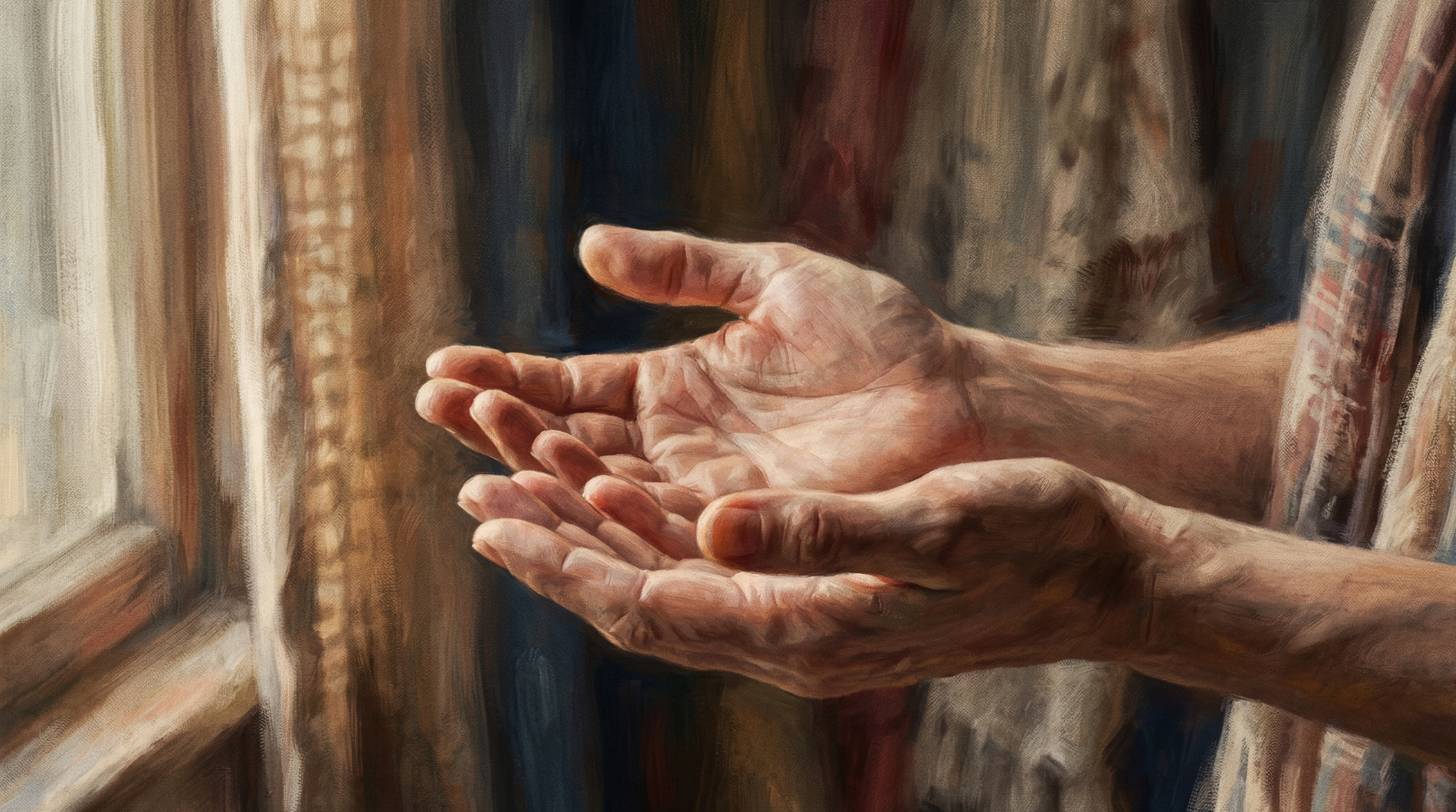
When that state becomes chronic, cortisol — the stress hormone — stays elevated. Worthington and Scherer (2004) note that over-production of cortisol — chronically elevated through sustained unforgiveness — carries documented health consequences across the cardiovascular and immune systems, and on cognitive and brain functioning. His research has also linked sustained unforgiveness to reduced hippocampal volume — a structure central to emotional memory processing.
The second thread is rumination.
Susan Nolen-Hoeksema's response styles research found that people who repeatedly focus on the causes and consequences of a painful event don't just feel worse — they stay worse for longer. In a 30-day naturalistic study tracking participants' daily moods, the degree to which people ruminated on the first day of a depressive episode predicted how long that episode would last (Nolen-Hoeksema, Morrow & Fredrickson, 1993) — a finding consistent with her earlier theoretical framework (Nolen-Hoeksema, 1991).
Rumination prolongs and intensifies distress not because the mind is broken, but because it is still stuck processing. The loop restarts because the brain hasn't received a signal that the event is complete.
The third thread is where this starts to turn around. Pascual-Leone and colleagues (1995) demonstrated that the brain does not sharply distinguish between a physical action and a vividly imagined one — both produce measurable neurological change. What the mind rehearses, the brain begins to treat as real.
That finding matters more than it might first appear.
What This Actually Means 🤔
So here's what the research is quietly assembling, piece by piece.
Social pain uses the same neural architecture as physical pain. Unresolved loss keeps a processing loop running that the brain won't close on its own. The body holds the physiological cost of unforgiveness in cortisol and tissue. The mind, given a vivid enough imagined experience, responds as if it were real.
Put those four things together and cord cutting starts to look less like a mystical practice and more like a reasonable response to how the nervous system actually works.
The term itself — cord cutting — comes from the idea that relationships leave energetic connections between people, and that those connections can be consciously severed with intention. If that framing resonates with you, there's real tradition behind it, and you're in good company. If it doesn't, you don't need it to benefit from the general idea. What the research suggests is that the mechanism underneath the metaphor is sound regardless of what you call it: a deliberate, symbolic act of release changes something in the brain and body that intellectual understanding alone doesn't reach.
Norton and Gino's 2014 study at Harvard found that people who performed rituals after a loss — any rituals, including ones they invented themselves — reported significantly lower grief than those who didn't. The specific content of the ritual didn't appear to matter.
Belief in the ritual's effectiveness didn't appear to matter either.
What mattered was the act of doing something intentional and symbolic to mark the ending (Norton & Gino, 2014). The psychological mechanism, they found, was restored felt control — the sense that the situation had a shape, a boundary, a before and an after.
That's what the mind is looking for when it loops. Not closure in the Hollywood sense — not resolution, not an apology, not the version of events that would finally make sense of everything. Just a signal that the chapter has actually ended.
Cord cuttingis a way of generating that signal yourself. Whether the cords are energetically real is a question this post isn't going to answer — though it's one worth sitting with yourself to work out where your personal spiritual beliefs sit. What can be said with more confidence is that the act of intentional release has measurable effects. The rest is yours to decide.
Practical Grounding 🏡
Before reaching for any practice, it's worth asking something more basic.
What are you actually holding onto?
Not who wronged you, or whether they deserved it, or what should have happened differently. Those questions have their place. But underneath them there's often something quieter — the version of yourself that existed inside that relationship, that job, that chapter. The part of you that felt seen, or needed, or purposeful, or safe. Bowlby's insight was that we don't just attach to people. We attach to who we are when we're with them (Bowlby, 1988).
Sometimes what makes letting go hard isn't the other person at all.
If that's landing somewhere, it might be worth writing it down before you do anything else. Not a letter to them — just an honest account of what you were holding, and what need it was meeting. Five minutes. No editing. No particular audience. That kind of naming tends to loosen things before any formal practice begins.
Then, if you want to take it further: the cord cutting visualisation itself is simpler than it sounds. Find somewhere quiet. Close your eyes. Picture the connection between you and the person or situation as something visible — thread, rope, light, whatever arrives without forcing it.
Feel the shape of the rope, does it sag and feel heavy — or is it light as a wisp?
However this particular cord feels to you, start to think about how you want to sever or release it.
You could imagine it’s just a rope you’re holding with two hand, if so — simply let go of them. Watch as the tension pulls their end of the cord away from you, fading into nothingness.
Or does it feel like a chonky hard to break rope?
You may need to get more creative in how you sever it. For these ones I imagine snipping it with scissors and make the motion with my index and middle finger — one handed or two-handed, like Sora from Kingdom Hearts when he learns how to dual wield ✂️.
You might imagine yourself with a bigger weapon if needed… 🤺
See below for a guided example I provided in a recent video.
Now What? ☑️
Three things worth trying, in whatever order feels right.
The first is the simple naming it exercise above — if you haven't already, write down not what happened but focus what you were getting from that connection. Safety, Recognition, A sense of direction, A version of yourself you liked? That's the thread worth pulling on before anything else. It may give you a sense for how heavy this rope feels.
The second is the cord cutting visualisation described above. It’s worth doing more than once if needed. You can return to it on different days and notice whether the cord feels any different — lighter, more resistant, somewhere in between?
The brain and nervous system don’t update immediately in a single session.
The third one is the letter you don't send.
Write it all out. Say everything — the things that were honestly fair, the things that weren't, the things you'd be embarrassed to admit you still think about after all you went through. Get it all out of your head and onto a page where you can actually look at it.
Then do whatever you want with it. Burn it, delete it, tear it up, fold it into something small and put it somewhere you'll eventually forget. Norton and Gino's research found that the act of creating a ritual around a loss — even one you invented yourself, even one you're not sure you believe in — still works. The mechanism isn't magic. It's agency. You made a move. Your nervous system recognises that.
One note: you might get a nasty shock if you go looking for your grocery list in the notes app later on and see your letter 🤣.
💜 Soul Mapping
If something in this post has struck a chord, i f you recognised a rumination loop, or felt the weight of something you've been carrying longer than you expected — it's worth knowing what kind of support fits what you're facing.
For strong disruptions or realisations, I always recommend working with a counsellor or psychologist. This would be if things are starting to impact your activities of daily life.
If you want to explore these themes of letting go in a more reflective, shadow-work oriented way, the Cord Cutting meditation is a built-in part of my Soul Mapping course. Among other activities and areas to focus on healing.
Soul Mapping is a personal deep-dive provided in one-to-one sessions or as a self-guided course that moves through the mind, body, and spirit — mapping where your energy is flowing, where it's been quietly leaking, and what your own patterns are telling you. The Cord Cutting practice is one part of a larger process of honest noticing, combining spiritual tools with practical, actionable steps you can take in your daily life.
References 📚
Bowlby, J. (1969/1982). Attachment and Loss, Vol. 1: Attachment. Basic Books.
Bowlby, J. (1988). A Secure Base. Basic Books.
Eisenberger, N. I., Lieberman, M. D., & Williams, K. D. (2003). Does rejection hurt? An fMRI study of social exclusion. Science, 302(5643), 290–292. https://doi.org/10.1126/science.1089134
Nolen-Hoeksema, S. (1991). Responses to depression and their effects on the duration of depressive episodes. Journal of Abnormal Psychology, 100(4), 569–582. https://doi.org/10.1037//0021-843x.100.4.569
Nolen-Hoeksema, S., Morrow, J., & Fredrickson, B. L. (1993). Response styles and the duration of episodes of depressed mood. Journal of Abnormal Psychology, 102(1), 20–28. https://doi.org/10.1037/0021-843X.102.1.20
Norton, M. I., & Gino, F. (2014). Rituals alleviate grieving for loved ones, lovers, and lotteries. Journal of Experimental Psychology: General, 143(1), 266–272. https://doi.org/10.1037/a0031772
Worthington, E. L., Jr., & Scherer, M. (2004). Forgiveness is an emotion-focused coping strategy that can reduce health risks and promote health resilience. Psychology & Health, 19(3), 385–405. https://doi.org/10.1080/0887044042000196674
Further Reading
The following sources informed the research and thinking behind this post but are not directly cited in the text.
Hazan, C., & Shaver, P. (1987). Romantic love conceptualized as an attachment process. Journal of Personality and Social Psychology, 52(3), 511–524. https://doi.org/10.1037/0022-3514.52.3.511
Nolen-Hoeksema, S., Wisco, B. E., & Lyubomirsky, S. (2008). Rethinking rumination. Perspectives on Psychological Science, 3(5), 400–424. https://doi.org/10.1111/j.1745-6924.2008.00088.x
Pascual-Leone, A., Nguyet, D., Cohen, L. G., Brasil-Neto, J. P., Cammarota, A., & Hallett, M. (1995). Modulation of muscle responses evoked by transcranial magnetic stimulation during the acquisition of new fine motor skills. Journal of Neurophysiology, 74(3), 1037–1045. https://doi.org/10.1152/jn.1995.74.3.1037
